Beyond Flavor: Why Texture is the Secret Soul of Chinese Cuisine
Article Content
When most people think about Chinese cuisine, they imagine the complex interplay of sweet, sour, salty, bitter, and spicy flavors. But ask any Chinese chef or food enthusiast what truly makes a dish exceptional, and they'll likely point to something else entirely: 口感 (kǒugǎn), or mouthfeel. In Chinese culinary philosophy, texture isn't just a pleasant bonus—it's a fundamental pillar of a great meal, as important as flavor itself.
The Philosophy Behind Kǒugǎn
The Chinese emphasis on texture stems from ancient principles of balance and harmony, rooted in concepts like Yin and Yang and Traditional Chinese Medicine. A well-composed meal should balance not only the Five Flavors but also temperatures, colors, and crucially, textures. This creates what food writer Fuchsia Dunlop describes as "playful, flirtatious, unexpected contrasting textures" that make eating a dynamic sensory experience.
Unlike in many Western cuisines where texture is often taken for granted, Chinese chefs deliberately cultivate and contrast mouthfeels. A proper meal might pair crispy with soft, chewy with tender, and dry with saucy—ensuring that no two dishes feel redundant. This careful orchestration transforms a meal from mere sustenance into an engaging journey for the palate.
A Rich Vocabulary of Sensation
The cultural importance of texture is reflected in the remarkably nuanced vocabulary used to describe it. Chinese has dozens of words for different mouthfeels, far exceeding what exists in English. Here are just a few:
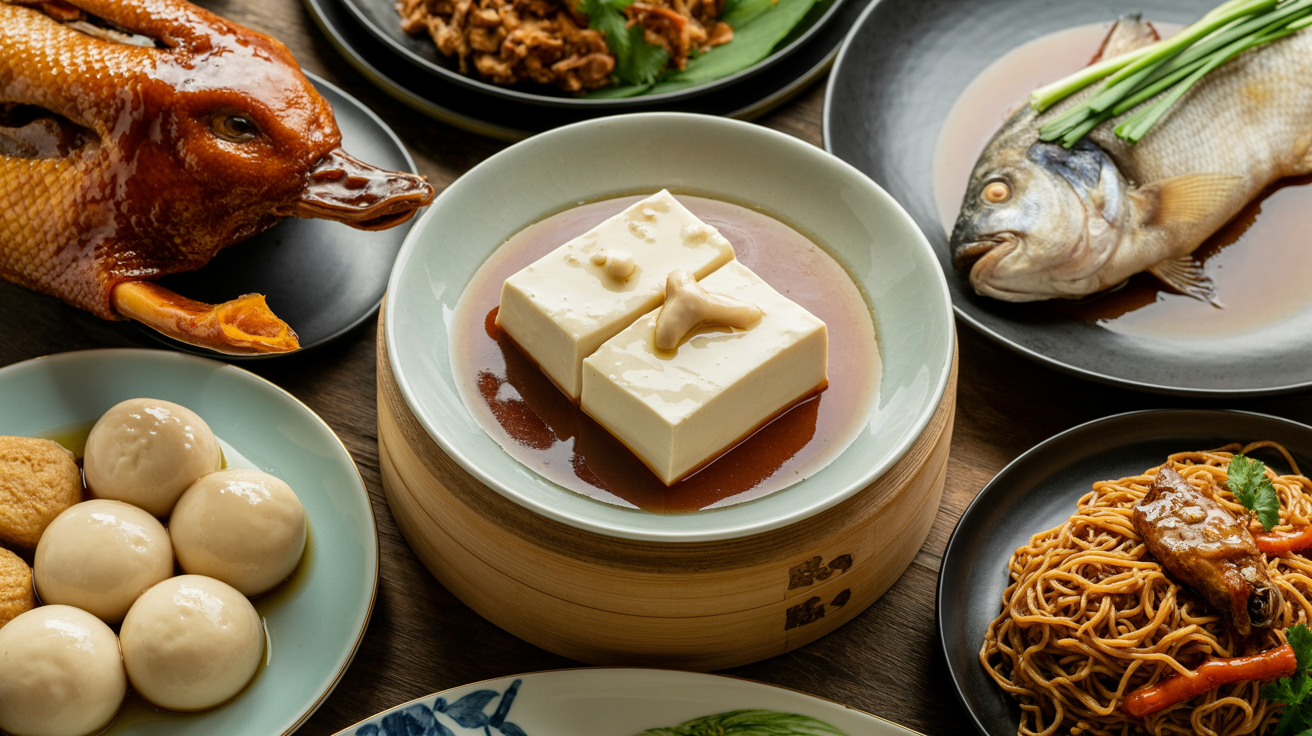
脆 (cuì) describes a satisfying crispness—think of freshly stir-fried vegetables or the crackling skin of Peking duck. 弹 (tán), sometimes called "Q" in modern slang, refers to a springy, bouncy elasticity highly prized in fish balls, squid, and certain noodles. 嫩 (nèn) captures supreme tenderness and succulence, the hallmark of perfectly steamed fish or silken tofu.
Then there's 爽 (shuǎng), a refreshing, slippery sensation that invigorates the mouth, and 糯 (nuò), the soft, sticky chewiness of glutinous rice dishes like zongzi or nian gao. Each term represents not just a physical sensation but a desired aesthetic quality that chefs work to achieve.
Ingredients Valued for Texture Alone
This appreciation for mouthfeel extends to ingredients that are prized almost exclusively for their texture, even when their flavor is neutral. Sea cucumber, chicken feet, duck tongue, and goose intestines are considered delicacies precisely because of the unique sensations they provide—gelatinous, cartilaginous, or pleasantly chewy. For the uninitiated, these ingredients might seem puzzling, but for those raised in the tradition, they represent the pinnacle of textural sophistication.
Regional Mastery: The Chaozhou Example
Different regional cuisines have developed their own approaches to texture. Chaozhou (Teochew) cuisine, a refined branch of Cantonese cooking from Guangdong province, offers a masterclass in preserving natural mouthfeel. The philosophy here is simple but demanding: let the ingredient's inherent texture shine through.
Chaozhou chefs favor gentle techniques like steaming, stewing, and blanching over aggressive methods like deep-frying. Their famous "fish rice"—freshly caught sea fish that's simply steamed and cooled—showcases firm, succulent flesh where texture takes center stage. The celebrated Chaozhou braised goose is simmered for hours in a complex spiced stock, rendering the meat exceptionally tender while maintaining its structural integrity.
This restraint and precision demonstrate how respecting an ingredient's natural texture can form the foundation of an entire culinary tradition.
Texture in the Diaspora
The story of Chinese food in diaspora communities reveals fascinating adaptations around texture. Early Chinese immigrants to America, facing discrimination and economic hardship, modified their cuisine to appeal to unfamiliar palates. American diners were generally unaccustomed to the gelatinous, chewy, or cartilaginous textures prized in China.
This led to the rise of American Chinese cuisine, where deep-frying became more prominent, creating the crispy coatings of dishes like General Tso's chicken and sweet and sour pork. Crab rangoon—crispy wontons filled with cream cheese—introduced a combination of crunchy and creamy textures that felt familiar to American tastes while incorporating dairy, an ingredient rarely used in traditional Chinese cooking.
However, the textural landscape continues to evolve. As immigration from various regions of China has diversified, authentic regional cuisines have become more accessible. Today, many restaurants offer both Americanized favorites and traditional menus that celebrate the full spectrum of Chinese mouthfeel. Younger generations of Chinese Americans are rediscovering and embracing the textural complexity of their heritage cuisine.
Learning to Appreciate Kǒugǎn
For those new to Chinese cuisine, developing an appreciation for texture can open up entirely new dimensions of enjoyment. Start by paying attention to mouthfeel as you eat. Notice the contrast between the crispy exterior and tender interior of a good spring roll. Appreciate the satisfying bounce of properly made fish balls. Experience the silky smoothness of well-prepared tofu.
Try dishes specifically designed to showcase texture: jellyfish salad for its unique crunch, braised pork belly for its melt-in-your-mouth tenderness, or hand-pulled noodles for their chewy resilience. As you become more attuned to these sensations, you'll understand why Chinese cuisine considers texture not as a secondary characteristic but as a language of its own—one that speaks to centuries of culinary wisdom.
Conclusion
To truly appreciate Chinese cuisine is to understand that it engages all the senses in equal measure. While flavor captures immediate attention, texture provides depth, variety, and sophistication. The concept of 口感 (kǒugǎn) represents a fundamental truth: that how food feels in the mouth is as important as how it tastes. Whether you're enjoying refined Chaozhou seafood, hearty Sichuan hot pot, or even Americanized takeout, paying attention to texture will deepen your appreciation for one of the world's most complex and harmonious culinary traditions.
The next time you sit down to a Chinese meal, take a moment to notice not just what you're tasting, but what you're feeling. That springy, crispy, silky, or tender sensation? That's the secret soul of Chinese cuisine revealing itself to you.