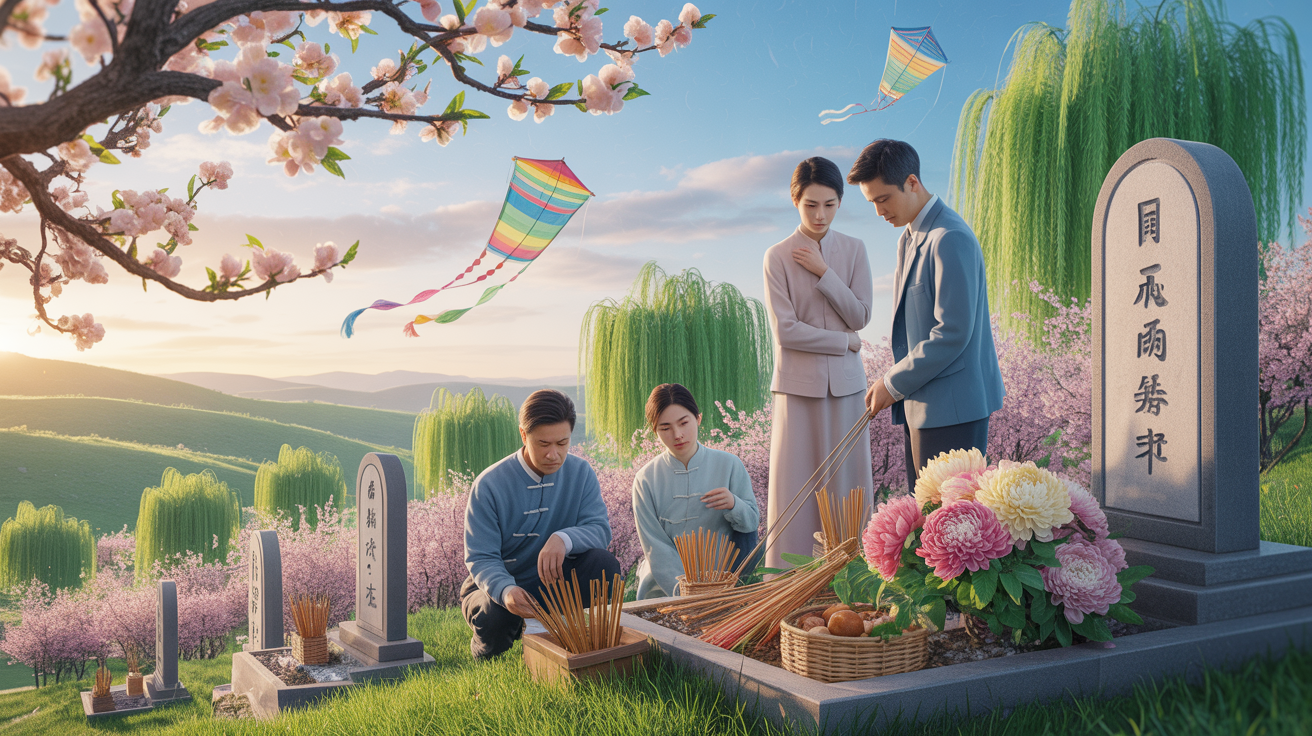
Qingming Festival: When China Honors the Past and Celebrates Spring
Article Content
Every spring, as the weather warms and nature awakens, millions of Chinese families participate in one of the country's most meaningful traditions: Qingming Festival. Known in English as Tomb-Sweeping Day, this 2,500-year-old observance is unlike any other holiday—it's simultaneously a day of solemn remembrance and joyful celebration, where honoring the dead goes hand-in-hand with embracing the vitality of spring.
If you're new to Chinese culture or part of the diaspora seeking to understand your heritage, Qingming offers a profound window into values that have shaped Chinese society for millennia. Let's explore what makes this festival so special.
When Loyalty Became a Festival
The story of Qingming begins with an act of extraordinary devotion. During China's Spring and Autumn period (1050–221 BCE), a nobleman named Jie Zitui served Prince Chong'er during his years of exile. When the prince was starving, Jie cut flesh from his own thigh to make soup for his lord—an act of loyalty that would echo through history.
Years later, when the prince became Duke Wen of Jin, he rewarded his followers but forgot about Jie Zitui, who had retired to the mountains with his mother. Filled with remorse, the duke ordered the forest set ablaze to force Jie out. Tragically, both Jie and his mother perished in the flames. To honor this sacrifice, the duke decreed that on the anniversary of Jie's death, no fires could be lit and only cold food could be eaten.
This became the Cold Food Festival, which eventually merged with the Qingming solar term (falling between April 4-6) in 732 AD when Emperor Xuanzong of the Tang Dynasty standardized ancestral ceremonies. Today, Qingming is a national holiday in China, recognized as intangible cultural heritage since 2006.
The Heart of Qingming: Tomb-Sweeping
The most important Qingming ritual is tomb-sweeping (sǎomù, 扫墓), a practice rooted in filial piety—the Confucian principle of respecting one's parents, elders, and ancestors. Families travel to gravesites to perform several key acts:
Cleaning the Gravesite: Weeds are pulled, debris cleared, and fresh soil added to show care for the deceased.
Making Offerings: Food, tea, wine, and incense are presented to nourish ancestral spirits. Joss paper (representing money) is burned, and in modern times, families also burn paper replicas of cars, phones, and houses—ensuring ancestors have everything they need in the afterlife.
Showing Respect: Family members kowtow before the tomb in order of seniority, a physical expression of reverence and connection across generations.
This isn't just about ritual—it's about maintaining family bonds that transcend death. For many Chinese people, especially those living far from home, Qingming is one of the few times each year they return to their ancestral villages, reconnecting with relatives and roots.
The Other Side: Celebrating Life and Spring
What makes Qingming unique is its duality. After the solemn tomb-sweeping, families embrace the joy of spring through several beloved traditions:
Spring Outings (tàqīng, 踏青): Literally "treading on the green," families enjoy picnics and walks in nature, appreciating the blossoming landscape.
Kite Flying: A favorite Qingming activity, kites are flown day and night (sometimes with small lanterns attached). There's a charming belief that cutting the string and letting the kite fly free releases misfortune and illness.
Willow Branches: Many people wear willow twigs on their heads or place branches on doors to ward off evil spirits—a practice that adds a touch of whimsy to the day.
This balance between mourning and celebration reflects a profound Chinese philosophy: death is part of life's natural cycle, and honoring the past doesn't mean neglecting the present.
A Taste of Tradition
Reflecting its Cold Food Festival origins, many Qingming foods are prepared in advance and eaten cold:
Qingtuan (青团): These sweet green rice balls, especially popular in southern China, are made from glutinous rice mixed with Chinese mugwort or barley grass juice. Filled with sweet bean paste, their vibrant green color symbolizes spring's renewal.
Sanzi (馓子): Crispy fried dough twists that vary by region—northern versions are larger and wheat-based, while southern ones are smaller and made from rice flour.
Regional variations abound: spring rolls in some areas, steamed rice with leaf mustard in others, and freshwater snails (considered especially delicious during Qingming) in certain regions.
Qingming Around the World
While customs vary across China—from elaborate rural tomb-sweeping on hillside family plots to more compact urban cemetery visits—the festival's essence remains constant. Chinese communities worldwide maintain these traditions with remarkable dedication.
In Malaysia and Singapore, Qingming observances are often more elaborate than in mainland China, preserving practices from the Ming and Qing dynasties that survived because they weren't affected by the Cultural Revolution. Families make offerings to the God of the Soil and often share meals at gravesites.
Related traditions exist throughout Asia: Vietnam's Tết Thanh Minh, South Korea's tomb-refurbishing customs, and Okinawa's unique observance (the only part of Japan that practices tomb-sweeping in spring rather than during the August Bon Festival).
Modern Adaptations
As with many ancient traditions, Qingming is evolving to meet contemporary realities:
Digital Remembrance: For those unable to travel home, "cyber tomb-sweeping" offers online memorial websites, live-streamed ceremonies, and even proxy services where people are hired to visit graves on a family's behalf.
Eco-Friendly Practices: Growing environmental awareness has led many to replace paper-burning and firecrackers with fresh flowers, tree-planting, or biodegradable urns.
A Note on Etiquette: Because of its solemn nature, you shouldn't wish someone "Happy Qingming." Instead, say "Wishing you health and safety for Qingming" (Qīngmíng jiànkāng píng'ān, 清明健康平安).
Why Qingming Matters
In our fast-paced modern world, Qingming offers something increasingly rare: a designated time to slow down, remember where we came from, and honor those who came before us. For the Chinese diaspora, it's a vital link to cultural identity—a reminder that no matter how far you travel, your roots remain.
But Qingming's message transcends culture. It teaches us that remembering the past and celebrating the present aren't contradictory—they're complementary. That honoring those who've passed doesn't require endless sadness, but can coexist with joy, renewal, and hope.
As spring arrives and nature awakens, Qingming reminds us that life is cyclical, that endings lead to new beginnings, and that the bonds of family—whether living or ancestral—are threads that connect us across time and space.
Whether you're sweeping a tomb, flying a kite, or simply taking a moment to remember loved ones, you're participating in a tradition that has sustained Chinese culture for over two millennia. And that's something worth celebrating.